Physical Address
304 North Cardinal St.
Dorchester Center, MA 02124
Physical Address
304 North Cardinal St.
Dorchester Center, MA 02124
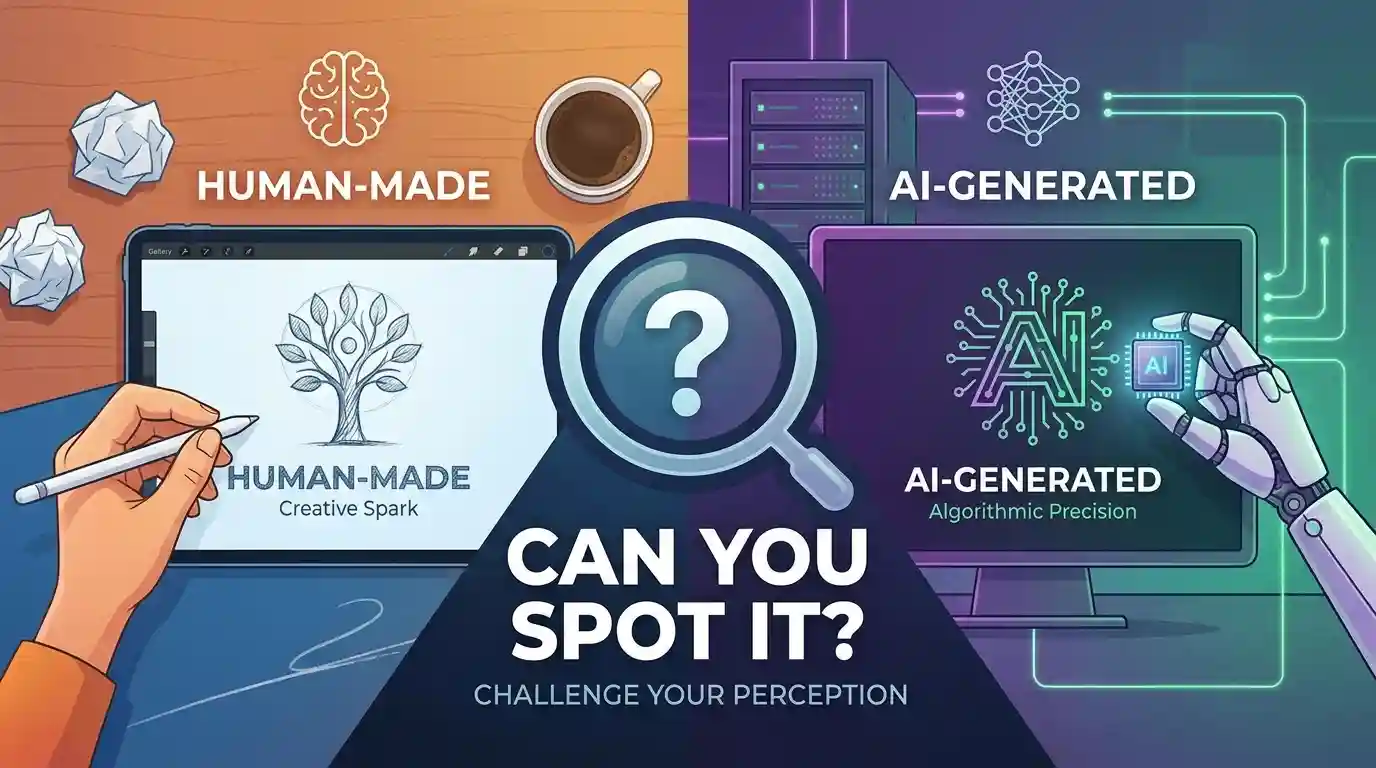
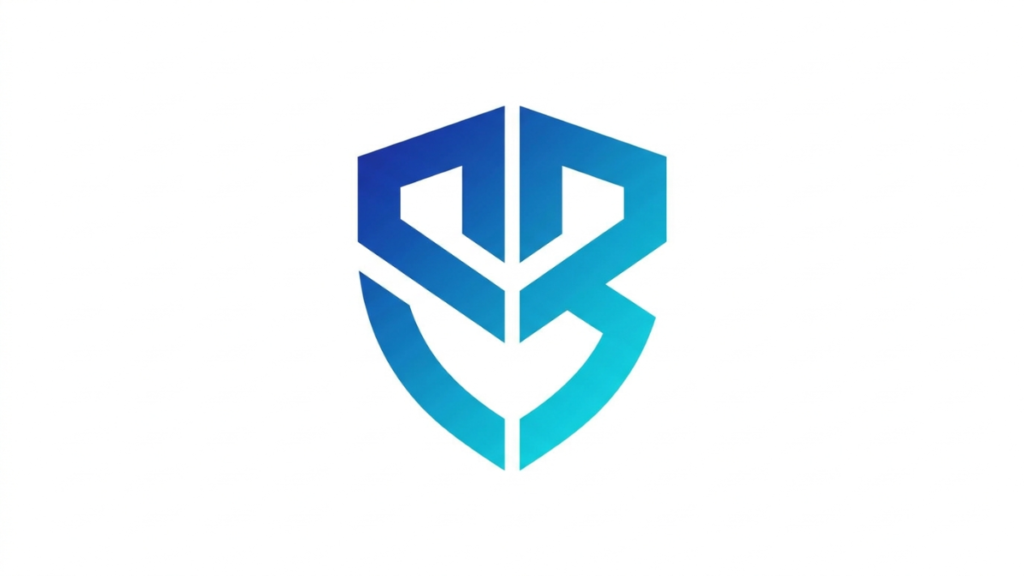
A designer friend spent 20 minutes insisting a logo was handcrafted. It was made by AI in under three minutes.
That’s not a knock on him. He’s good at his job. It’s just that the line – the one between “AI output” and “human design” – has moved somewhere most people haven’t caught up to yet.
And if professional designers are getting tripped up, what chance does anyone else have?
This matters right now because AI logo tools have exploded. Looka, Brandmark, Turbologo, Canva’s AI features – there are dozens of them, and they’re getting genuinely better, faster than most people realize. So the question isn’t theoretical anymore. It’s practical: when you’re looking at a logo, can you tell who – or what – made it?
If you’ve ever used an AI logo generator, even a free one, you’ve noticed this immediately: the output looks clean.
Not clean like “good effort.” Clean like it went through a design review. Precise geometry. Color palettes that don’t clash. Fonts that pair well. Layouts that scale properly from business card to billboard.
The reason for this is straightforward – AI has absorbed thousands of design principles and can apply them without fatigue or second-guessing. Symmetry, negative space, typographic hierarchy: these are learnable rules, and AI has learned all of them.
The difference between a forgettable result and a sharp one often comes down to how you guide the AI with structured prompts – the tool only outputs what the input directs it toward.
This is stuff junior designers spend months internalizing. AI does it as a default.
So at first glance? A lot of AI logos look like real professional work. Because by the technical standards of design, they often are.
Here’s the part that trips people up most in comparison tests.
The logos that are unmistakably human don’t look better, exactly. They look deliberate in a different way. There’s usually a concept underneath the form – something that connects the visual to the specific brand, not just to “logos in general.”
Think of the FedEx logo, with the arrow hidden in the negative space between the E and the x. Or the Amazon smile that doubles as a delivery route from A to Z. These choices didn’t come from pattern recognition. They came from someone who understood what the brand actually needed to say.
AI doesn’t know your business. It knows logo patterns. So it produces work that looks professional without necessarily meaning anything specific to you. The result is often what you’d call generic-professional: polished, safe, and a little hollow when you stare at it long enough.
There’s another tell – emotional specificity. Human designers make choices based on context: who the founder is, who the customer is, what certain shapes signal in certain industries or cultures.
AI averages all of that out. It goes for the most statistically plausible version of “this type of logo” rather than the most accurate version of your logo.
Fifty logos. Twenty-five human-designed, twenty-five AI-generated across multiple tools. One group of designers, brand strategists, and regular business owners. No labels.
Average accuracy: 61%. Barely better than guessing.

Designers did marginally better – around 68% – but even they got caught by the best AI outputs. The logos that fooled them most weren’t the flashy ones. They were the quiet, restrained ones: a simple wordmark, a clean geometric icon, a two-color palette that felt considered.
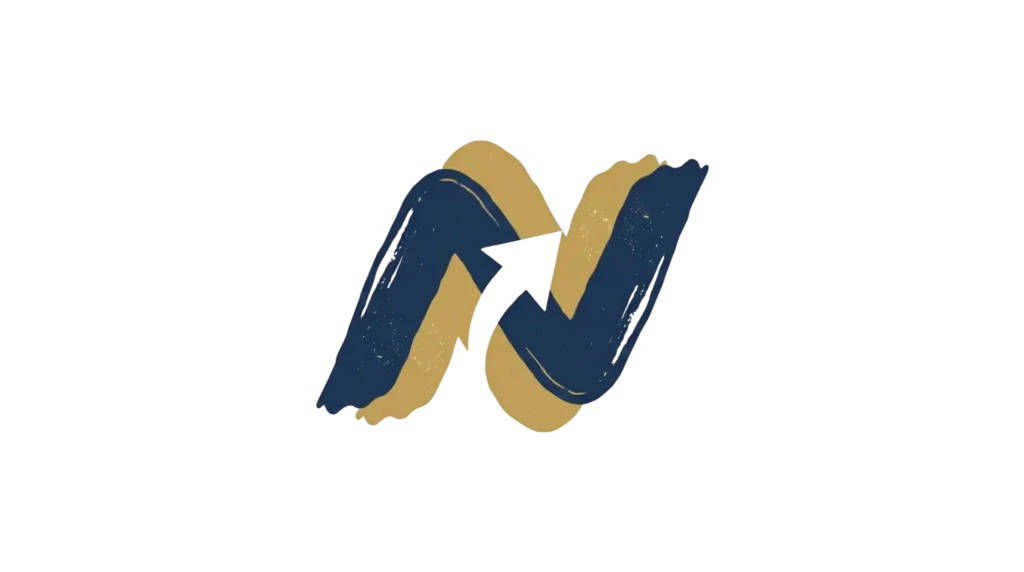
What’s actually interesting is why people got tripped up. The newer AI tools have started mimicking imperfection on purpose. Slight asymmetry. Subtle texture. Hand-drawn-style elements with just enough irregularity to read as intentional. They’ve learned that “too perfect” is a tell – so they’ve started building in controlled flaws.
When an AI starts gaming its own detection, something has genuinely changed.
If you’re a business owner: you don’t need to spend a large budget on a logo to get something that looks credible. The AI tools available today – many of them free or very low-cost – can produce strong starting points fast.
But starting point is the operative phrase. AI handles the execution layer well. The thinking layer – what the logo should actually communicate, what it should feel like five years from now, whether the icon works in the context of your specific market – still needs a human in the loop.
If you’re a designer: this isn’t the threat it’s sometimes framed as. It’s a shift in where your value sits. The part of design that’s about technical execution is being automated. The part that’s about judgment – about understanding a brand deeply enough to make choices that actually mean something – is still yours.
The gap between “looks professional” and “is exactly right” is where the real work happens. AI can close the first distance. The second one is still a human problem.
Search “AI logo vs human logo comparison” and look at five examples before reading any captions. Be honest about your guesses.
You’ll probably be surprised at least once. That surprise is worth paying attention to – it’s a pretty accurate map of where AI design actually stands right now.
Want to test AI logo tools yourself? Explore the comparisons and generators reviewed at logoaitool.com.