Stop asking Midjourney to design your logos.
You are probably doing it every day. You type a prompt, press enter, and pray to the AI gods for clean text.
87% of creators waste hours generating 50 variations of the exact same messy logo.
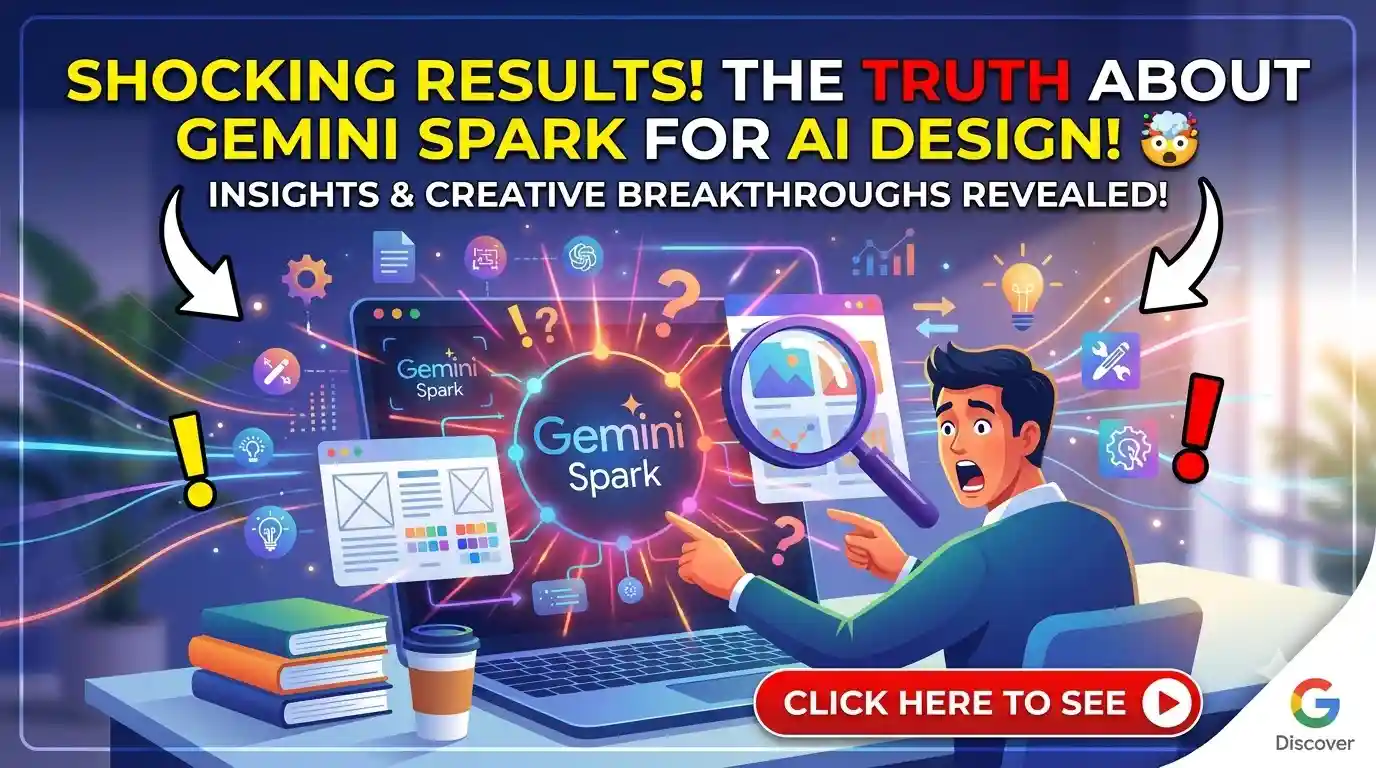
Then Google released Gemini Spark as part of its latest Gemini AI ecosystem updates.
I tested it for two weeks on real brand briefs. Here’s what actually happened.
1. What is Gemini Spark?
Forget static image generators that just throw pixels at a canvas.
Gemini Spark is Google’s new design-aware AI engine. It doesn’t just guess what a logo looks like. It understands visual hierarchy, typography rules, and vector composition.
Imagine this scenario.
You need a logo for a modern coffee brand. You want an arch icon, thin serif text, and a warm cream background.
Old you: write a 50-word Midjourney prompt with 12 style parameters. Get back a gorgeous image with gibberish text like “Cofeeee Bnnn”. Ew…If you’ve ever wondered why ChatGPT struggles with logos, it’s because standard models don’t understand spatial letterform layout.
Gemini Spark: type “Minimalist coffee brand mark, clean typography, SVG vector hierarchy”.
It builds the mark, aligns the text, and lets you edit individual visual layers.
Magic.
2. Static Pixels vs. Design-Aware Workflows
Most creators do it the old way: painful, static, un-editable.
You generate a JPEG. You like the icon, but hate the font. Too bad. You have to open Photoshop, chop off the text, match the background color, and rebuild it manually.
With Gemini Spark, it’s interactive, modular, done in seconds.
You click the text layer inside the prompt canvas. You change the typeface. The AI adjusts the icon spacing automatically to keep optical balance.
No Photoshop required. (Yes, really.)
3. How to Use It for Brand Assets
Getting started takes less than 3 minutes.
Here is the exact 3-step workflow I used:
- Set the Brand Context: Feed Gemini Spark 3 visual examples of your desired brand vibe instead of long text descriptions.
- Lock the Typography: Specify your font weight first. Gemini Spark prioritizes text rendering before generating icon graphics.
- Export as Vector: Click export and select clean Scalable Vector Graphics format.
That’s it.
4. What It Excels At
Gemini Spark wins on three core design tasks:
- In-Image Text Precision: Spellings are accurate on the first try. No weird floating letters.
- Layout Balance: Icons and wordmarks respect standard grid alignments automatically.
- Vector Output: Exports clean SVG paths ready for print, t-shirts, and billboards.
The speed is ridiculous.
5. Where Gemini Spark Fails
I promised to be honest. It’s not all sunshine.
Here is where Gemini Spark loses:
- Ultra-Complex Illustrations: If you want a detailed mascot with 50 intricate shading gradients, Midjourney still looks more artistic.
- Abstract Artistry: It prefers clean, functional design over weird, experimental art styles – even though ugly AI logos are winning among audiences seeking raw authenticity.
- Over-Correction: Sometimes it forces standard alignment rules when you actually want an asymmetrical design.
If you need hand-drawn fantasy art, look elsewhere.
6. Where to Start
Stop generating static JPEGs and calling them logos.
Open Gemini Spark. Give it one real client brief today.
Test the vector export on a physical mockup.
You’ll never go back to slot-machine image prompting again.