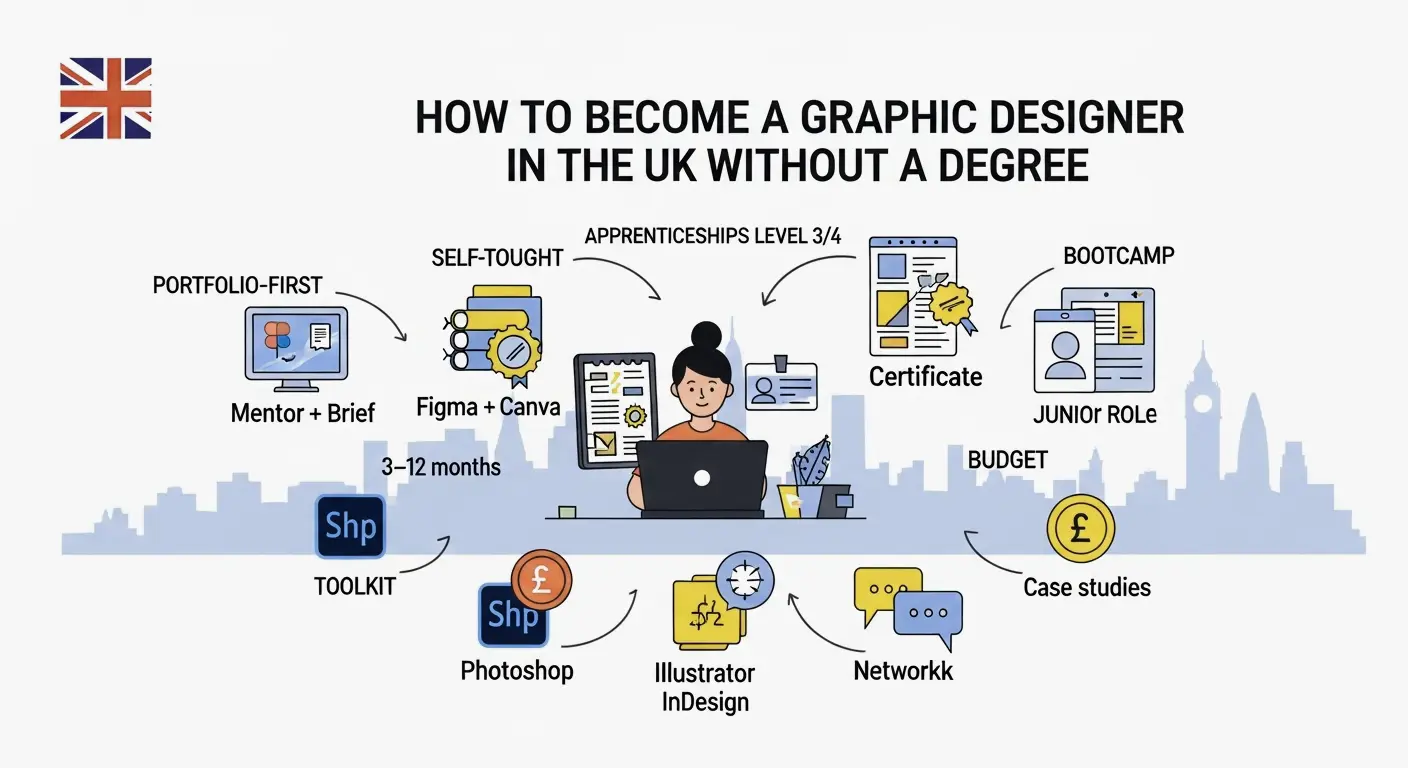

TL;DR : To become a graphic designer in the UK without a degree, pick a path (apprenticeship, self-study, short course). Learn the key tools (Photoshop, Illustrator, InDesign, Figma, Canva), create a niche portfolio with 5 to 8 projects, complete real assignments (for clients or pro bono), launch a simple portfolio website, collect testimonials, and apply for junior roles or freelance gigs. You can build a job-ready portfolio in 3 to 12 months, based on your commitment and past experience.
Introduction
More UK employers value strong portfolios and real skills over formal degrees, especially for junior creative jobs and apprenticeships.
You can gain work-ready skills and build an impressive portfolio through non-degree paths like apprenticeships, self-study, short courses, internships, or starting in junior roles.
This guide provides clear steps, timelines of 3 to 12 months, and UK-specific resources to help you become a graphic designer without a degree.
Who Hires Graphic Designers in the UK Without a Degree?
Many agencies and in-house teams in retail, tech, charities, education, and startups hire junior designers, apprentices, and creative assistants, focusing on portfolios and real results.
Freelance and contract positions are also available for non-degree candidates who can showcase effective case studies and results.
UK Entry Routes Without a Degree
Apprenticeships
What they are:
These are paid jobs with training. You usually get at least 6 hours a week of learning outside of work. Apprenticeships last a minimum of 12 months and include assessments.
Levels and duration:
Most design apprenticeships are at Levels 3 or 4 and last 12 to 24 months. Training varies, with some programs offering time off for learning.
How to Find Them:
- Check the official site in England for apprenticeship listings.
- Look up apprenticeship standards to see what each program offers and its funding.
- Get general advice on how apprenticeships work and who can apply.
What to expect:
You’ll have a mentor and work on real projects. There will also be training and an assessment after a “gateway” review. Job listings usually include details like pay, hours, and training schedules.
Where to look:
Explore apprenticeship options based on your interests. There are tools available to help you find creative and design paths.
Find an apprenticeship (GOV.UK) — official search and apply portal for live apprenticeship vacancies in England.
College Courses and Short Courses
You can quickly learn important skills and build a great portfolio at Further Education (FE) colleges, BTECs, City & Guilds, adult education, and evening classes without needing a full degree. Look for courses that focus on developing your portfolio, getting feedback, and working on real-world projects.
Bootcamps and Online Learning
Look for UK‑recognised providers offering:
- Portfolio projects mapped to job roles.
- Live briefs, critique, and demo‑day reviews.
- Career support (CV/portfolio reviews, mock interviews, job referrals).
- Clear capstones aligned with junior graphic designer outcomes.
Self‑Taught Route
- Build a structured curriculum covering fundamentals, software, and production.
- Join critique communities for feedback and iteration.
- Seek micro‑gigs and pro bono briefs to add real outcomes.
- Choose a niche to stand out (e.g., local hospitality, charities, packaging, esports, SaaS).
Work Experience and Internships
- Approach local SMEs, charities, student societies, and community groups.
- Agree on a clear scope, deliverables, timelines, and success measures.
- Convert outcomes into case studies with before/after visuals and metrics.
What GCSEs/A‑levels Help (Optional)
Helpful subjects include Art & Design, Design & Technology, IT/Computer Science, and Media Studies. A strong portfolio can make up for not having many formal qualifications, which is especially useful for apprenticeships and junior jobs.
Skills Checklist (What to Learn)
- Visual fundamentals: typography, layout, grids, colour theory, composition, branding basics, accessibility.
- Software: Adobe Photoshop, Illustrator, InDesign; Figma for UI and collaboration; Canva for rapid content.
- Production: print and digital specs, export settings, packaging dielines, mockups, asset handoff.
- Business/soft skills: reading briefs, client communication, estimating time/cost, invoicing, licensing basics.
- Adjacent skills (optional): motion graphics (After Effects), presentation design, basic web handoff (Figma to dev).
Build a Job‑Ready Portfolio Without a Degree
Positioning: Choose a niche (e.g., local restaurants, charities, beauty, packaging, esports, SaaS) to tailor case studies and messaging.
Project mix (5–8 case studies):
- 2–3 real client pieces (paid or pro bono) with clear scope and measurable outcomes.
- 2–3 strategic self‑initiated briefs solving realistic business problems.
- 1–2 redesigns with rationale, research, and competitive analysis.
If you’re wondering where to start, check out our guide on 5 Must-Have Graphic Design Projects to Land Your First Job — it covers project ideas that impress employers and build portfolio strength fast.
Case Study Template:
- Brief and goals
- Research and references
- Concept exploration
- Iterations and rationale
- Final deliverables and mockups
- Results/impact (metrics, testimonial)
- Reflection and next steps
Presentation:
- Quality over quantity—avoid logo dumps; show process, constraints, and outcomes.
- Host on a fast portfolio site with custom domain.
- Include About, Services, Contact, and a clear value proposition tailored to UK clients/employers.
Free and Low‑Cost Project Ideas (UK‑friendly)
- Local charity rebrand/annual event poster series.
- Independent café menu, packaging labels, social templates.
- Market stall or festival identity pack.
- Student society branding kit.
- Local sports team badge and merch set.
- NHS health awareness poster concept.
- Heritage site wayfinding/poster mockups.
Suggested 12‑Week Learning and Portfolio Sprint
- Weeks 1–2: Foundations—typography, grids, colour; pick a niche; set goals; daily software drills.
- Weeks 3–4: 1st client/volunteer project; document process; 1 self‑initiated brief.
- Weeks 5–6: 2nd client or outreach project; start portfolio site build.
- Weeks 7–8: Add 2 more briefs; refine type systems; add mockups; seek critique.
- Weeks 9–10: Polish case studies; write rationales; collect testimonials.
- Weeks 11–12: Finalise site; apply for roles; tailor CV/cover letters; keep outreach momentum.
Finding Apprenticeships, Junior Roles, and Clients
Where to look:
- Apprenticeships: Official Find an apprenticeship service (England) for live vacancies; UCAS also lists official portals for Scotland, Wales, and Northern Ireland, plus search tools and alerts.
- Jobs: Major UK job boards, LinkedIn, and creative‑specific boards (agency sites and specialist platforms).
- Clients: Local business directories, community groups, coworking spaces, and industry meetups.
Application Strategy:
- Tailor CV and portfolio to each role.
- Open with a skills‑first intro and link to 2–3 relevant case studies.
- Show credibility via testimonials, before/after visuals, and measurable outcomes.
Networking:
- Attend UK design meetups, online communities, and portfolio reviews.
- Use a 30–60–90‑day outreach plan with value‑first messages (feedback requests, small free audits, relevant resources).
Budget: Tools and Setup
Software tiers:
- Free/low‑cost: Figma, Canva Pro trial, Affinity alternatives.
- Adobe discounts: Consider student/education pricing via FE enrolment; weigh monthly vs annual plans.
Hardware:
- A reliable laptop meeting Adobe/Figma minimums; optional colour‑calibrated monitor and drawing tablet.
Assets:
- Understand font/stock licensing; prefer open licences; avoid trademark conflicts.
Legal, Ethical, and Accessibility Basics
- Use contracts and scopes with defined rounds, timelines, and usage rights.
- Invoice professionally and track deliverables and approvals.
- Apply accessibility principles in colour contrast, typography, and layout for both print and digital work.
How to Stand Out Without a Degree
- Niche positioning and consistent visual style aligned to a target sector.
- Case studies with measurable outcomes (conversion, footfall, engagement).
- Original photography for mockups; reduce reliance on generic templates.
- Community contributions: critique, templates, resources, process breakdowns.
- Public learning: share progress logs, design rationales, and before/after analyses.
Common Mistakes to Avoid
- Overemphasising logos while neglecting typography, layout, and systems.
- Bloated portfolios with weak projects.
- Aesthetic‑only work with no constraints or business goals.
- Ignoring brief, audience, or brand objectives.
- Using unlicensed assets or mishandling print specs.
Salary Expectations and Progression (Brief)
- Typical early roles: Junior Graphic Designer, Marketing Designer, Creative Assistant, Apprentice Designer.
- Salaries and progression: Junior roles often start in the low‑to‑mid £20,000s and move to £25,000–£38,000 at mid‑level, with seniors/lead roles rising beyond that; UK freelance day rates for juniors commonly fall around £150–£200/day, increasing with experience and niche positioning.
- Freelance: Day rates generally grow as case studies demonstrate results and specialisation.
Want specific figures by role, city, and experience? Read: Graphic Design Starting Pay: Guide to Entry‑Level Salaries.
Conclusion
You can become a graphic designer in the UK without a degree! Focus on building your portfolio, finding apprenticeships, or teaching yourself. Show your work and results.
Start Now: Choose one area of design, stick to a 12-week plan, and take on a project. This will help you create a strong case study.



Leave a Comment