Physical Address
304 North Cardinal St.
Dorchester Center, MA 02124
Physical Address
304 North Cardinal St.
Dorchester Center, MA 02124

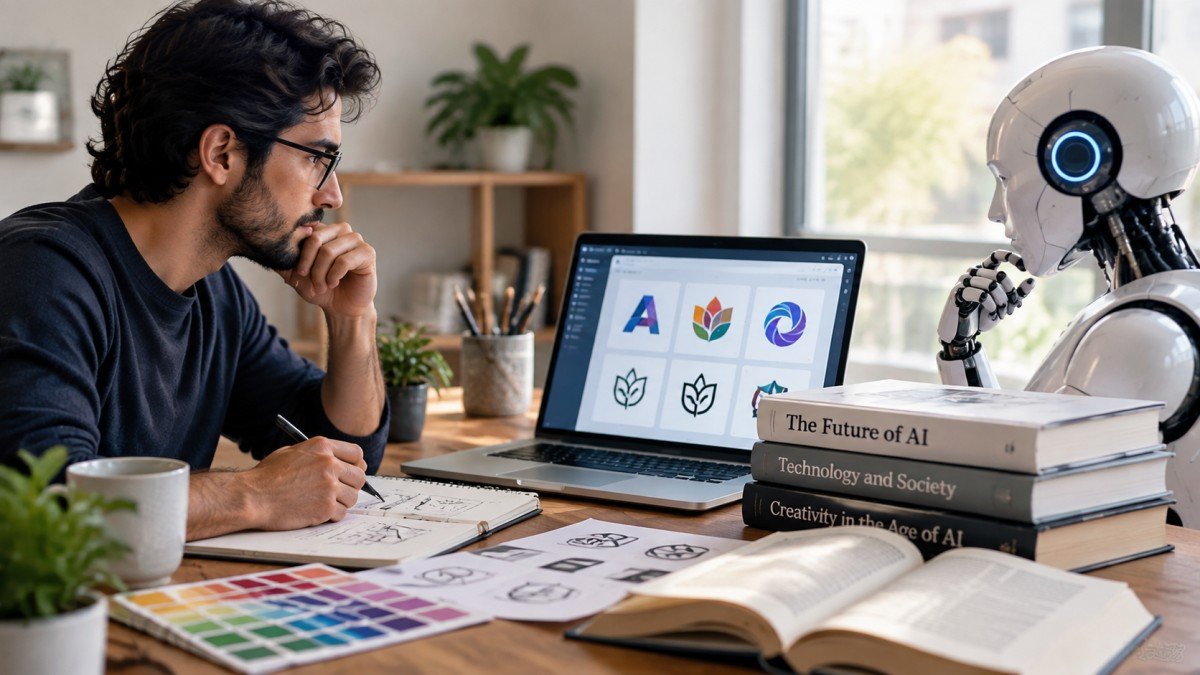
Artificial intelligence is no longer limited to automation. It is now entering the world of creativity – creating logos, generating artwork, assisting writers, and changing how people design and communicate.
For years, AI was seen mainly as a technology that could automate repetitive tasks. Today, that perception is changing rapidly as AI tools become capable of producing creative content that once required human skills.
From AI-generated logos and realistic images to writing assistance and digital branding, machines are becoming powerful creative partners. The question is no longer whether AI can create – but how humans will adapt to a future where technology works alongside creativity.
A recent debate around AI – generated writing has brought this conversation into the spotlight. As artificial intelligence continues to influence creative industries, writers, designers, and businesses are exploring both the opportunities and challenges of this new era.
Artificial intelligence has moved far beyond basic automation.
Modern AI platforms can help users:
Tools such as AI image generators, writing assistants, and design platforms are allowing individuals and small businesses to create professional content without needing large teams.
For startups and entrepreneurs, this means faster experimentation and lower creative costs.
A business owner who previously required weeks to develop a brand concept can now use AI tools to generate multiple ideas in a few minutes.
The biggest discussion around AI is not just about speed – it is about creativity.
Can a machine truly create something original?
AI models learn from huge amounts of existing information and use patterns to generate new outputs. They can combine ideas, styles, and concepts in ways that appear creative.
For example:
However, human creativity involves more than producing content.
Human creators bring:
This is why many professionals see AI as a creative assistant rather than a complete replacement.
One of the biggest areas affected by AI is branding.
Previously, creating a logo required:
Now, AI-powered logo tools can create initial concepts instantly.
A business can enter details like:
and receive multiple logo directions.
This does not mean professional designers are becoming unnecessary. Instead, many designers are using AI to speed up research, brainstorming, and early concept development.
The future may belong to designers who combine creative skills with AI technology.
However, as automated design adoption grows, founders must also investigate why your AI-generated logo might not legally be yours before registering trademarks or commercial assets.
AI has one major advantage – speed.
A human designer may spend hours creating initial concepts, while AI can generate hundreds of options quickly.
But speed alone does not create meaningful brands.
A successful logo is not just a beautiful image. It represents:
AI can provide options, but humans still need to decide which idea connects with people.
The future creator may not be someone who avoids AI.
Instead, successful creators will likely be those who understand how to use AI effectively.
Future skills may include:
The answer is more complex than a simple yes or no.
AI will likely automate some repetitive creative tasks, such as:
But creativity also requires:
The role of creators may change, but creativity itself will continue to evolve.
The growth of artificial intelligence brings both opportunities and challenges.
Businesses can become more efficient. Creators can work faster. Individuals can access powerful creative tools that were previously available only to large companies.
At the same time, society must think about important questions:
The decisions made today will influence how AI becomes part of everyday life.
AI is not just another technology update. It represents a major shift in how people create, design, and communicate.
From AI-generated books to AI-powered logo design, machines are becoming active participants in the creative process.
The future may not be about humans competing against AI.
It may be about humans who know how to work with AI, creating better ideas faster than ever before.