Physical Address
304 North Cardinal St.
Dorchester Center, MA 02124
Physical Address
304 North Cardinal St.
Dorchester Center, MA 02124
Stop assuming you own your logo.
You typed a prompt. You picked a version. You paid for the download.
None of that means you hold the copyright.
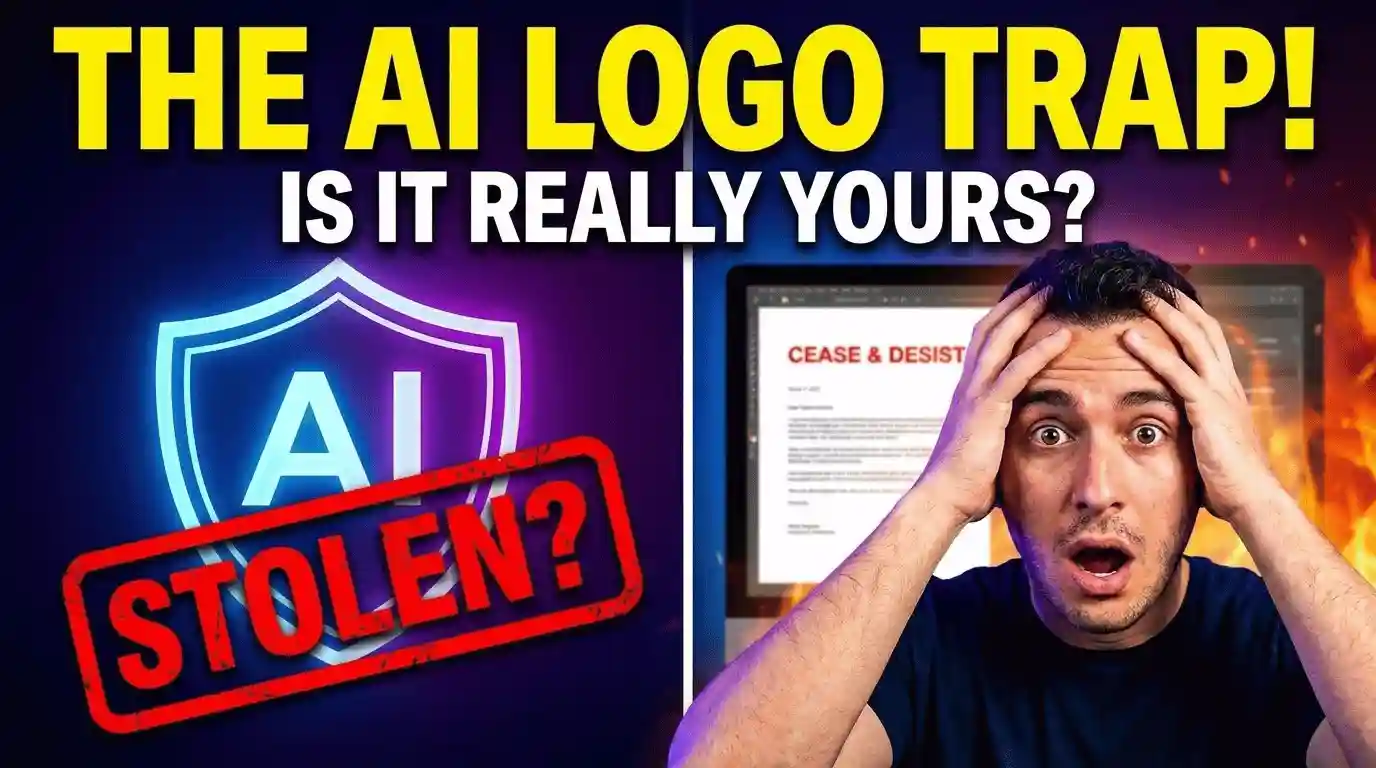
A federal appeals court already ruled on this. Purely AI-generated work doesn’t qualify for copyright protection in the US. No human author, no copyright. That’s not a startup rumor – that’s the Thaler v. Perlmutter case, and the Supreme Court refused to touch it, so it’s settled law right now.
Your logo maker never mentioned this at checkout.
Copyright is what stops someone from copying your logo and using it themselves.
No copyright means no lawsuit if a competitor lifts your mark and slaps it on their own site. You can’t sue for infringement over something you never legally authored.
Here’s the part that trips people up: trademark is different. You can still register your AI logo as a trademark – trademarks protect brand identity, not the artwork itself. But trademark and copyright do different jobs, and most founders think they’re the same thing.
They’re not.
Old assumption: I generated it, I own it, end of story.
Real situation: you might have a trademark (if you register it, and it’s distinctive enough) but zero copyright over the actual image file.
That gap matters more than it sounds. Trademark protects your name and mark in commerce – think “Nike” plus the swoosh, used on shoes. Copyright protects the artistic work itself – the actual drawing. Without copyright, someone could reproduce your logo’s design in a different context, on merchandise, in a parody, in a totally different market, and copyright law gives you nothing to stand on.
Trademark might still save you. Copyright won’t be there to help.
Not every AI logo loses copyright protection. The line is human involvement.
If you generated 20 versions, then substantially edited one in Illustrator – adjusted the vector paths, changed the composition, added original elements – you’ve likely added enough human authorship to qualify. The US Copyright Office has said as much in its own guidance: sufficient creative human input can make an AI-assisted work eligible.
Purely “type a prompt, download the PNG, done” – probably not protected.
Old way: prompt, download, ship it. New way: prompt, generate options, then actually redesign what you picked – new spacing, new elements, your own creative decisions layered on top.
That edit is what makes it legally yours.
There’s a second problem, separate from copyright.
AI logo models train on huge datasets of existing brand marks. Sometimes the output lands too close to something already registered. Not identical – just close enough to create “likelihood of confusion,” which is the actual legal test trademark examiners use.
Foley & Lardner attorneys flagged exactly this in 2025: businesses using generative AI for logos face real IP risk specifically because AI-generated marks can resemble existing trademarks in ways a human designer, consciously avoiding known brands, usually wouldn’t.
Your logo could get rejected at registration. Or worse, get you a cease-and-desist a year in, after you’ve printed it on every business card you own.
None of this means skip AI logo generators. Speed is real. Iteration is real.
Tools like Ideogram and newer image models finally render text accurately inside logos – actual readable brand names, not garbled letters. That was broken two years ago. It’s mostly fixed now. Generating 30 concepts in an afternoon, testing color and typography fast, prototyping before hiring a designer – genuinely useful, genuinely fast.
Good for first drafts. Good for direction-finding. Good for speed.
It’s bad at giving you a defensible, ownable final asset without extra work.
It’s bad at flagging when your output resembles an existing registered mark – the tool has no idea what’s already trademarked in your industry. It’s bad at legal nuance generally; no logo generator is going to tell you “this might not be copyrightable,” because that’s not their business to admit.
And it’s bad for anyone who assumes “paid subscription” equals “full legal ownership.” Read the tool’s terms of service – our DesignEvo review breaks down exactly what one popular platform actually grants you at each pricing tier. Most don’t promise you copyright — they promise you a license to use the file.
Different thing entirely.
Three moves, in order.
Generate with AI, then edit substantially – real changes, not a filter. Run a trademark search before you commit, even a basic one, before printing anything. And if the brand actually matters – funded startup, real revenue on the line – get a human designer or an IP lawyer to look at the final mark before it goes on your homepage.
Your logo took ten minutes to generate.
Protecting it takes slightly longer than that.


[…] as automated design adoption grows, founders must also investigate why your AI-generated logo might not legally be yours before registering trademarks or commercial […]