Physical Address
304 North Cardinal St.
Dorchester Center, MA 02124
Physical Address
304 North Cardinal St.
Dorchester Center, MA 02124

The landscape of logo design has undergone a dramatic transformation in 2025, with artificial intelligence revolutionizing how businesses create their brand identities.
With the AI logo generator market projected to reach $0.59 billion in 2025 and expected to grow to $1.35 billion by 2029, these intelligent design tools have become indispensable for entrepreneurs, small businesses, and designers alike.
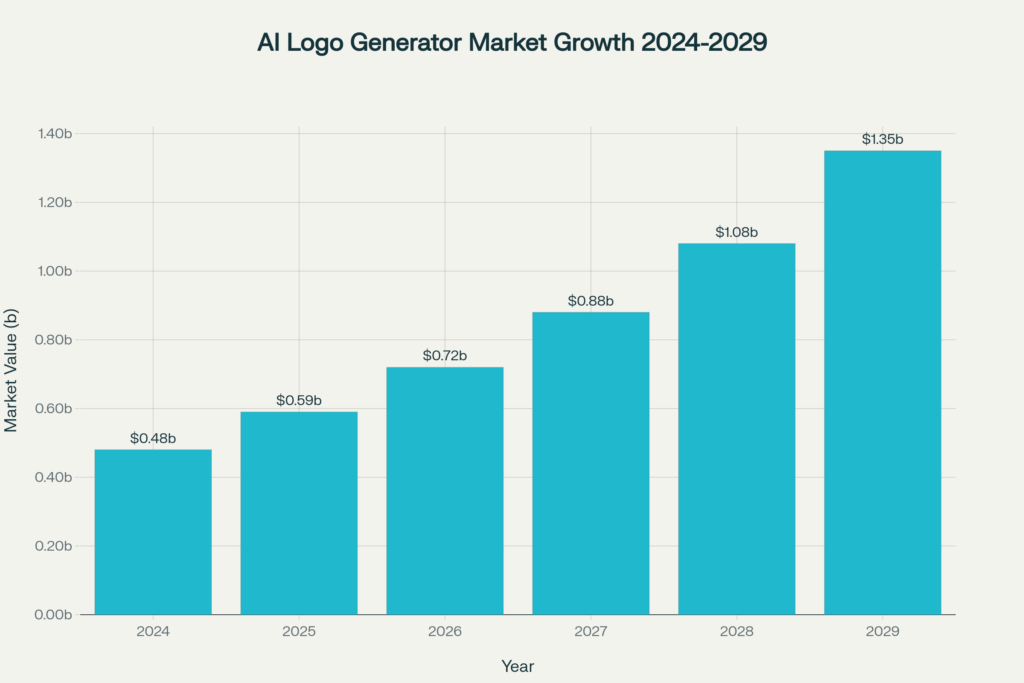
Recent market research reveals that 40% of small businesses now use AI tools to create logos, representing a significant shift from traditional design methods.
This comprehensive guide examines the evolution of AI logo design tools, provides detailed analysis of the top 10 platforms available in 2025, and offers strategic insights for choosing the right solution for your brand needs.
The leap in AI logo design technology since 2023 has been staggering. Machine learning algorithms now analyze millions of design patterns to produce logos that balance originality with brand relevance.
Gone are the days of generic templates—today’s tools use neural network logo generation to create unique visuals that adapt to industry trends.
Features like AI style transfer logos let users apply popular art movements or competitor aesthetics to their designs, while context awareness ensures logos look sharp across digital and print formats.
Compare this to 2023’s tools, which struggled with scalability and often produced rigid, repetitive designs. Now, logo design automation tools like LogoAI.com (more on this later) integrate brand voice analysis, scanning your website or social media to align logos with your existing tone and visuals.
Selecting the optimal AI logo design tool requires careful consideration of multiple factors that extend beyond initial cost considerations.
The decision-making process should begin with a clear assessment of your specific needs, technical requirements, and long-term branding objectives.
Customization capabilities represent the most critical factor, as 72% of businesses consider customizability a key criterion when selecting an AI logo generator. Look for platforms that offer extensive typography options, comprehensive color palette controls, and flexible layout arrangements.
The ability to upload custom fonts and incorporate existing brand elements can significantly enhance the uniqueness of your final design. Tools like Brandmark excel in this area by offering unlimited editing capabilities even after purchase.
Technical specifications and output quality directly impact the practical usability of your logo across different media. Ensure the platform provides multiple file formats including scalable vector graphics (SVG), high-resolution PNG files, and print-ready formats like EPS or PDF.
Resolution options should accommodate both digital applications (website headers, social media profiles) and physical media (business cards, signage, merchandise).
Integration capabilities with existing design workflows and marketing tools can significantly streamline your branding process.
Platforms that seamlessly integrate with popular design software like Adobe Creative Suite, Canva, or Figma can save considerable time when developing comprehensive brand materials. This integration becomes particularly valuable when creating cohesive marketing campaigns or brand guidelines.
Pricing structure and long-term value should be evaluated based on your anticipated usage patterns and future needs. While free tools may seem attractive initially, they often impose limitations on file quality, usage rights, or customization options.
Consider whether you need a one-time purchase, subscription model, or freemium approach based on your budget constraints and expected frequency of use.
User interface and learning curve significantly impact your ability to efficiently create and refine designs.
Platforms with intuitive drag-and-drop interfaces and clear navigation reduce the time investment required to achieve professional results. This factor becomes particularly important for users without extensive design experience.
Licensing and commercial usage rights require careful attention to avoid legal complications. Some platforms retain rights to generated designs or impose restrictions on commercial usage. Ensure the platform provides clear ownership transfer and commercial licensing for your intended use cases.
Healthcare brands benefit from tools like MediDesign AI, which prioritizes trust through serif fonts and calming palettes.
Food and beverage apps like FlavorLogo use logo design trends 2025 (think organic shapes and gradients) to appeal to Gen Z. Tech companies lean on PixelForge, a logo generation without designer tool that incorporates circuit patterns and futuristic typography.
After generating your logo, use post-generation editing techniques to refine it. Adjust colors using logo color psychology AI—blue for trust, red for urgency. Pair fonts with typography AI selection tools that ensure readability.
Convert files to SVG for scalability or PNG for social media. For complex tweaks, export to logo design without Photoshop, platforms like Figma. For step‑by‑step methods to refine color, spacing, typography, and exports beyond default tool settings, follow these advanced customization techniques.
Ownership isn’t automatic. Some AI logo makers retain rights to templates, so check licensing terms. Trademark your final design to avoid clashes. Tools like LogoAI.com clarify commercial usage policies, granting full ownership upon purchase.
For a practical assessment of features, pros, cons, and real results, see the in‑depth LogoAI.com review for small businesses
Augmented Reality (AR) and Virtual Reality (VR) integration represents one of the most exciting frontiers in logo design. Designers are now creating logos with AR and VR environments in mind, enabling three-dimensional and interactive brand experiences.
This trend is particularly relevant for technology companies, gaming businesses, and experiential marketing agencies that want to position themselves as digital innovation leaders.
AR-enabled logos allow customers to engage with brands through smartphone interactions, creating memorable experiences that traditional static logos cannot provide.
Emotion-responsive logo systems are emerging as AI technology becomes more sophisticated in analyzing user behavior and emotional responses.
These dynamic systems can adapt logo elements based on context, user demographics, or even real-time emotional feedback from audiences.
This represents a significant shift from static brand identities to adaptive visual systems that maintain brand consistency while optimizing for emotional impact.
The AI logo design revolution of 2025 represents more than technological advancement – it signifies a fundamental democratization of professional design capabilities.
With 40% of small businesses now utilizing these tools and the market projected to reach $1.35 billion by 2029, AI logo generators have become essential components of modern business strategy.
The platforms reviewed in this guide offer unprecedented opportunities for businesses of all sizes to create distinctive, professional brand identities that compete effectively in today’s visual marketplace.
The AI logo design landscape of 2025 offers unprecedented opportunities for businesses of all sizes to create professional, memorable logos without breaking the bank.
Whether you opt for free tools with impressive capabilities or invest in premium options with advanced features, today’s AI-powered platforms deliver results that rival traditional design processes at a fraction of the cost and time.
As these technologies continue to evolve, the gap between AI-generated and human-designed logos continues to narrow. Don’t wait to refresh your brand identity—explore these tools today and discover how artificial intelligence can transform your visual branding strategy!