Physical Address
304 North Cardinal St.
Dorchester Center, MA 02124
Physical Address
304 North Cardinal St.
Dorchester Center, MA 02124

A logo that works on a 27-inch monitor will not automatically work on a phone notification bar. The brands that figured this out early are pulling ahead – quietly, and in plain sight.
This is the reality of responsive logo design. It is not a trend from a design conference. It is a practical problem that hits every business with a website, an app, or a social media account.
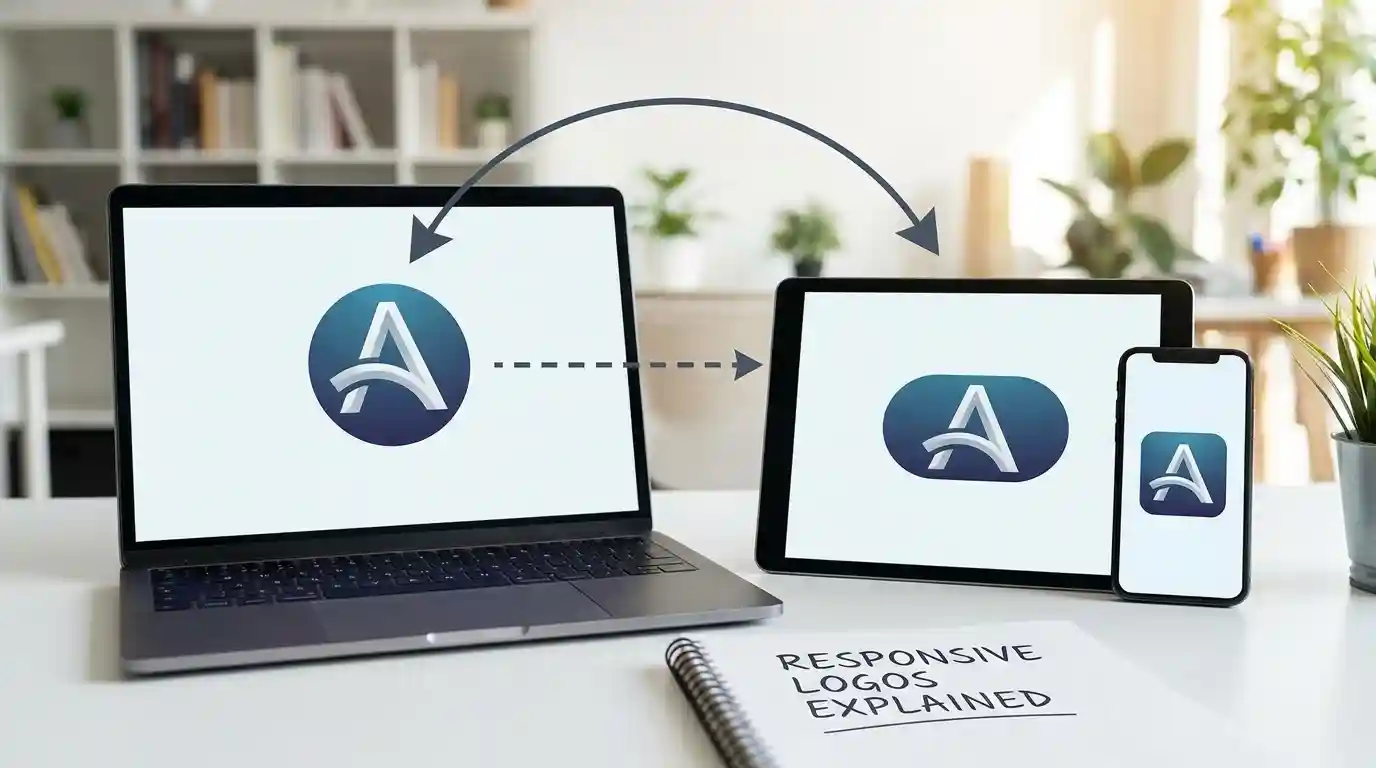
A responsive logo is not one file. It is a set of versions of the same logo – each one adapted for a specific screen size or context.
Think of it like this: your full logo might include your company name, a tagline, and a symbol. That full version works well on a desktop homepage or a printed brochure.
On a tablet, the tagline might disappear. On a mobile screen, only the symbol stays. In a browser tab, you get a tiny icon – maybe just one letter or a single shape.
The logo is still yours. The brand is still the same. But the form changes depending on where it shows up.
Five years ago, most business owners did not think much about this. A website meant a desktop. A logo meant one file.
That changed fast.
Today, the average person touches a brand across six to eight surfaces before they buy – a Google search result, a social media post, a mobile site, an app, a WhatsApp message, a browser tab. Each of those surfaces has different size rules.
A logo that ignores this ends up distorted, too small to read, or just ugly in half those places.
According to a 2023 report by Lucidpress, companies with consistent brand presentation across all channels see revenue 10 to 20 percent higher than those that do not. Logos are the most visible part of that consistency.
Here is what a well-designed responsive logo system looks like in practice:
Mastercard removed its name from its logo in 2019. The two overlapping circles were already recognizable enough. Most people did not notice the change – which was exactly the point.
Nike, Apple, and Twitter (now X) did the same thing years ago. The symbol carries the brand now. The name is optional.
Here is where most small and mid-size businesses get stuck.
They have one logo file – probably a PNG – saved on someone’s desktop from three years ago. That file gets stretched, cropped, or squeezed into whatever space needs filling.
The result is a logo that looks different in every place it appears. Different proportions. Different color. Sometimes blurry. Sometimes cut off. If you have ever uploaded your logo to a social media profile and watched it get forced into a circular frame, you already know exactly how bad this gets – fitting a logo into a circle crop without losing your business name or symbol is harder than it looks.
This does not just look unprofessional. It actively weakens brand recognition. Your customers stop connecting the dots between your website, your app, your LinkedIn page, and your packaging – because the visual signal keeps changing.
A 2022 study from the Nielsen Norman Group found that users form trust judgments about a brand’s visual consistency within the first 50 milliseconds of exposure. That is before they read a single word.
You do not need to rebrand. You need to audit what you have and plan for what you are missing.
Start here:
This is a half-day project for most businesses. It costs less than most people expect and fixes a problem most businesses do not know they have.
If you are not sure what your logo is supposed to communicate in the first place, it is worth pausing to think about the primary goal of branding in graphic design before you start the audit.
Your logo is not just a picture. It is a signal. Every time someone sees it – on any screen, at any size – they are either getting a clear signal or a confused one.
The businesses winning on brand recognition right now are not necessarily the ones with the best-looking logos. They are the ones whose logos work everywhere, every time, without anyone having to think about it.
That is what a responsive logo system does. It removes the thinking.
Next step: Screenshot your logo from your phone’s browser tab right now. If you cannot tell what it is, you have your answer.