Physical Address
304 North Cardinal St.
Dorchester Center, MA 02124
Physical Address
304 North Cardinal St.
Dorchester Center, MA 02124

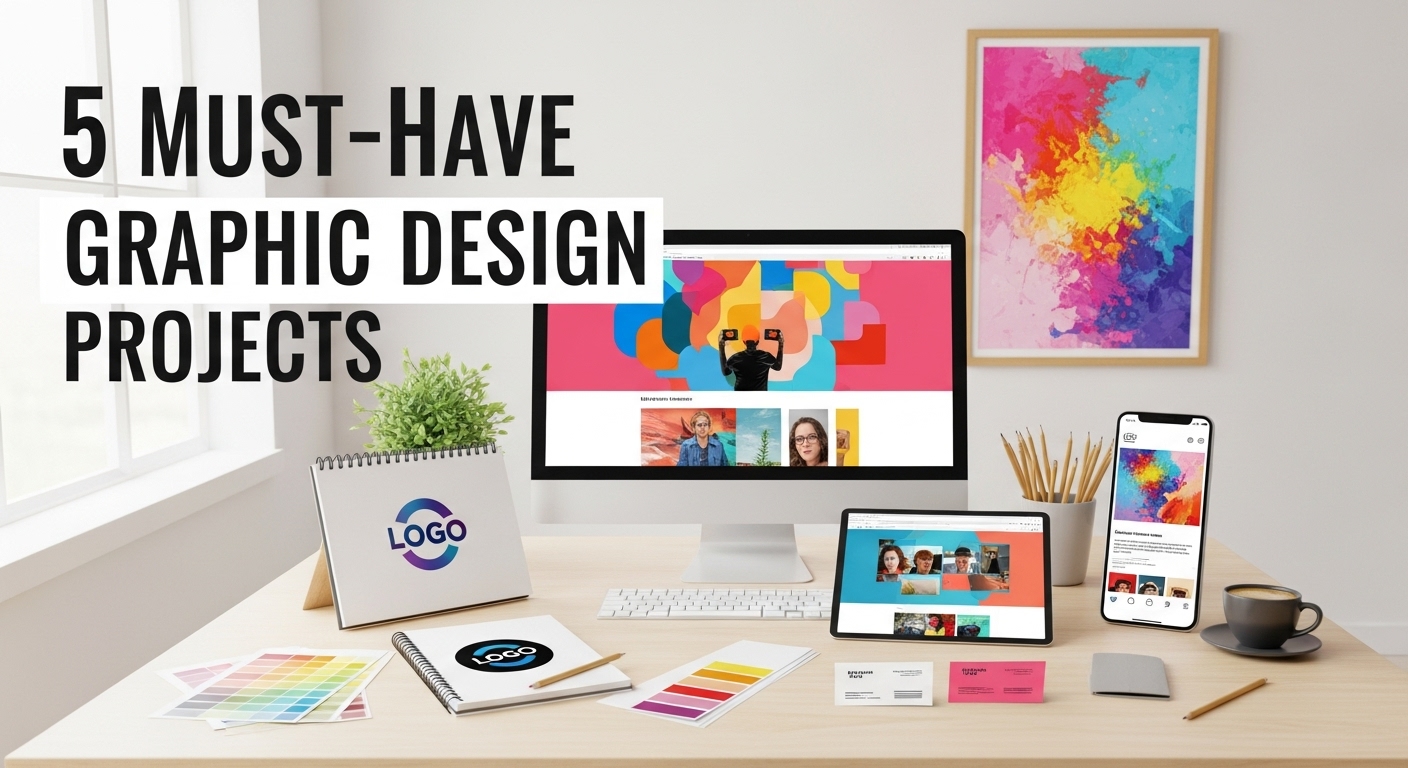
Breaking into the competitive graphic design industry requires more than just talent—it demands a strategic portfolio that showcases your versatility and professional readiness.
As the creative landscape continues to evolve in 2025, hiring managers are seeking designers who can demonstrate both creative vision and practical application across multiple mediums.
Understanding what specific projects to include in your portfolio can be the difference between landing that coveted first position and remaining in the application pile.
The graphic design job market remains robust, with the US Bureau of Labor Statistics projecting an average of 21,100 annual job openings from 2023 through 2033.
However, this opportunity comes with intense competition, making a well-curated portfolio absolutely essential for standing out.
Before diving into specific projects, it’s worth understanding the financial landscape of the industry—particularly for newcomers wondering about compensation expectations in their first roles.
Logo design represents the cornerstone of any graphic designer’s portfolio, serving as the most immediate demonstration of your ability to distill complex brand concepts into memorable visual symbols.
This project type showcases your understanding of typography, color theory, and symbolic representation—all critical skills that employers actively seek.
When developing logo projects for your portfolio, focus on creating comprehensive brand identity systems rather than standalone marks. Include variations for different applications, color palettes, and usage guidelines.
Consider redesigning logos for local businesses or creating fictional brands in diverse industries to demonstrate versatility.
The key is showing your design process from initial concept sketches to final execution, proving your strategic thinking alongside creative execution.
Successful logo projects should demonstrate your ability to research target audiences, understand market positioning, and translate abstract business goals into tangible visual solutions.
Include both minimalist and complex approaches to show range, as current trends favor everything from ultra-simple word marks to detailed illustrative emblems.

In today’s digital-first marketplace, social media design skills have become non-negotiable for graphic designers.
Social media graphics represent one of the most in-demand project types, with 33% of marketers relying on visual content regularly.
This project category allows you to demonstrate your understanding of platform-specific requirements, brand consistency, and engagement-driven design.
Create comprehensive social media packages that include Instagram posts, Stories templates, Facebook cover photos, LinkedIn banners, and Twitter headers.
Show your ability to maintain visual consistency across platforms while adapting to different aspect ratios and user behaviors.
Include examples of both organic content and paid advertising materials to demonstrate commercial viability.
Consider developing campaign concepts that tell cohesive stories across multiple posts, showcasing your strategic thinking and campaign development skills.
This approach proves you understand marketing objectives beyond mere aesthetics, positioning you as a more valuable candidate for brands seeking integrated design solutions.

Despite increasing digitization, print design remains a crucial skill set that many emerging designers overlook, creating opportunities for those who master it.
Business card design specifically demonstrates your attention to detail, understanding of print processes, and ability to work within strict spatial constraints.
Develop a comprehensive print portfolio that includes business cards, letterhead, brochures, and flyers. Show multiple approaches—from minimalist professional cards to creative, industry-specific designs that push boundaries while maintaining functionality.
Include specifications for print production, paper choices, and finishing techniques to demonstrate technical knowledge. Consider creating complete corporate identity packages that show how your designs work across multiple touchpoints.
This approach proves your understanding of brand consistency and practical application, skills that are particularly valuable for agencies and corporate in-house positions.

Web design skills have become increasingly valuable as businesses prioritize online presence, with web designers earning between ₹3-5 LPA at entry level.
Including website mockups in your portfolio demonstrates your understanding of user experience principles, responsive design, and digital brand application.
Create mockups for diverse industries and user types, showing your ability to adapt designs for different audiences and business goals.
Include mobile-responsive designs and demonstrate understanding of current web design trends while maintaining usability principles. Show your design process from wireframes to high-fidelity mockups, proving your strategic approach to digital experiences.
Consider developing complete website redesign projects for existing businesses, comparing your solutions to current implementations.
This approach demonstrates problem-solving skills and your ability to improve upon existing designs—a valuable trait for potential employers.
Editorial design projects showcase your typography skills, layout expertise, and ability to organize complex information hierarchically.
These projects prove your versatility beyond marketing materials and demonstrate skills applicable to corporate communications, magazines, annual reports, and digital publications.
Create magazine layouts, annual report designs, or digital publication templates that show your understanding of information architecture and visual storytelling.
Include both text-heavy and image-driven publications to demonstrate range. Show your ability to create consistent style systems that work across multiple pages while maintaining reader engagement.
Consider developing complete publication rebrand projects or creating original publication concepts that address specific audiences or topics. This approach shows initiative and creative thinking while demonstrating practical design skills.

As you develop these portfolio projects, it’s crucial to understand the financial landscape you’re entering. The graphic design industry offers varied compensation structures, particularly for entry-level positions. Fresh graduates can typically expect starting pay between ₹1.98-3.2 lakhs annually, with freelancers potentially earning ₹10,000-₹80,000 per project depending on scope and complexity.
You can check out the complete Guide to Entry-Level Salaries in Graphic Designing Sector.
Understanding these benchmarks helps you negotiate fair compensation and make informed career decisions.
For comprehensive insights into compensation expectations, market trends, and negotiation strategies, exploring detailed salary guides can provide valuable context for your career planning.

Beyond individual projects, how you present your work matters significantly. Create both digital and physical portfolio versions to accommodate different interview scenarios.
Your digital portfolio should load quickly, navigate intuitively, and showcase projects with sufficient context about objectives, process, and results.
Include brief project descriptions that explain your role, challenges overcome, and design decisions made.
This approach helps interviewers understand your thought process and problem-solving approach, often more valuable than the visual outcome alone.
Landing your first graphic design job requires strategic portfolio development that demonstrates both creative ability and professional readiness.
These five project types—logo design, social media graphics, print collateral, website mockups, and editorial design—provide the foundation for showcasing your versatility and market awareness.
Remember that portfolio development is an ongoing process. Start with strong examples in each category, then continuously refine and update your work as your skills develop.
The investment in creating comprehensive portfolio projects pays dividends in job opportunities, client acquisition, and long-term career growth. Success in graphic design comes from balancing creative vision with practical application.
By including these essential project types in your portfolio, you’ll position yourself as a well-rounded candidate ready to tackle the diverse challenges that modern graphic design careers demand.