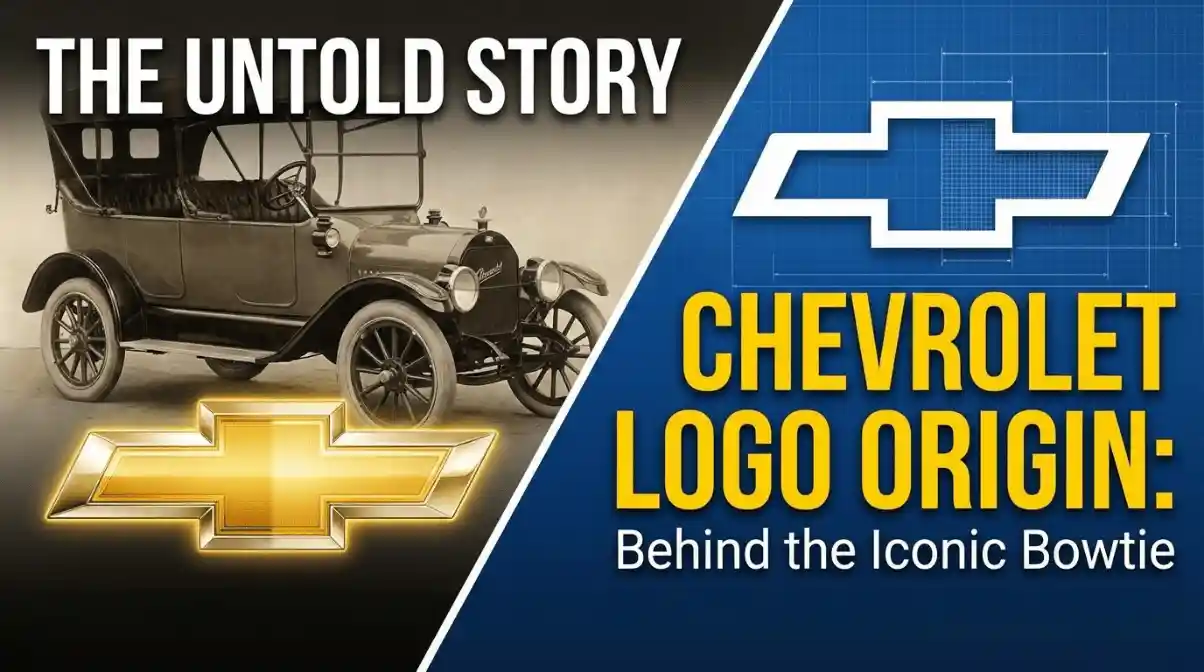

The Chevrolet bowtie is one of the most familiar badges in the automotive world. You can spot it on pickup trucks, family SUVs, performance cars, and electric models. For more than a century, this simple shape has come to represent durability, innovation, and a deep connection to American driving culture.
Yet even with all that history, one big question still remains: where did the Chevrolet logo actually come from? Chevrolet began using the bowtie in 1913, and while the emblem has been updated many times since then, its core shape has stayed almost untouched. That rare kind of consistency is a big reason the logo still feels timeless today.
What makes the story even more interesting is that the logo’s true origin has never been fully settled. There is no single explanation that everyone agrees on. Instead, the Chevrolet bowtie sits in that rare space where history, branding, and legend all overlap.
That mystery has only made the emblem more memorable. It is not just a company badge. It is a symbol people connect with, remember, and trust. Over time, the bowtie became more than a design choice. It became a piece of Chevrolet’s identity.
The Evolution of the Chevy Logo
The story of the Chevy logo starts in the early years of the company. Chevrolet was founded by William C. Durant and Louis Chevrolet, and by 1913 the brand had introduced the bowtie emblem that would go on to define it.
From that point forward, the logo became a constant even as the company itself changed, expanded, and adapted to new eras of car design. One thing stands out right away when looking at Chevrolet’s branding history: while details changed, the basic bowtie shape remained the heart of the brand.
Over the decades, Chevrolet refined the emblem to match the style of each era. In earlier years, the design appeared flatter and more graphic. Later versions used brighter colors, stronger outlines, and more polished finishes.
By the late 20th century and early 2000s, the bowtie took on a more dimensional look, often featuring metallic edges and the familiar gold center that many drivers know today. The styling evolved, but the message stayed steady: Chevrolet wanted a logo that felt strong, dependable, and easy to recognize in a second.
Some major stages in the logo’s development include:
- 1913: Chevrolet introduced the bowtie, launching what would become one of the most recognizable emblems in the industry.
- 1920s: The logo began appearing with richer color choices, helping it feel more established and refined.
- 1950s: The emblem was updated to better reflect the sleek, stylish mood of mid-century car design.
- 1970s: Chevrolet gave the bowtie a sharper and more forceful look during the muscle car years.
- 1990s and 2000s: The design became more modern and three-dimensional, leading into the gold-and-chrome look that became especially familiar in the modern era.
That long evolution says a lot about Chevrolet as a brand. It did not throw away its identity every time trends changed. Instead, it kept building on the same symbol. That gave the bowtie something many logos never achieve: continuity. Whether it appears on a classic Chevy or a current model, it still feels connected to the same story.
The Untold Story Behind the Bowtie
Now comes the part that keeps people talking. Where did the bowtie shape actually come from?
The most repeated story says William C. Durant saw a wallpaper pattern in a French hotel and thought the shape would make the perfect logo for Chevrolet. It is a famous theory because it sounds both random and believable.
A bold design catches his eye, he remembers it, and it later becomes one of the biggest symbols in automotive history.
Another theory says Durant may have seen a similar shape in a newspaper advertisement and adapted it into the Chevrolet emblem. Then there is another explanation that links the logo to the Swiss cross, possibly as a subtle tribute to Louis Chevrolet’s Swiss roots.
The truth is that none of these stories has been proven clearly enough to close the case. And maybe that is exactly why the logo has such lasting appeal.
The Chevrolet bowtie is not tied down to one neat little story. It carries a little mystery. That mystery gives the logo a sense of depth that many modern brand marks do not have.
But here is the bigger point: even if the exact origin stays unclear, the success of the symbol is not a mystery at all. The bowtie worked because it was simple, bold, and unforgettable.
It had a shape strong enough to stand on its own without needing extra decoration. It looked balanced, solid, and confident. In branding, that matters. Great logos do not have to explain themselves. They make an impression right away.
Also Read : Top 3 Car Logo With Two Arrows and Their Hidden Stories
Why a Bowtie?
The shape of the Chevrolet logo plays a huge role in why it has lasted for so long. A bowtie is wide, symmetrical, and clean. It feels stable. It feels strong. It also feels different enough from a circle, shield, or lettermark that it stands out fast. That kind of instant recognition is one of the hardest things for a brand to build.
For Chevrolet, the bowtie became a visual shortcut for qualities the company wanted drivers to remember: reliability, capability, toughness, and progress. It works just as naturally on a work truck as it does on an SUV or sports car. That flexibility is rare. Many logos fit one image well but struggle when placed across very different types of vehicles. The Chevy bowtie never had that problem.
It also gained emotional meaning over time. For many drivers, the emblem brings back memories of first cars, family road trips, weekend drives, and years of brand loyalty. That kind of meaning cannot be created overnight. It grows through decades of visibility and trust. Chevrolet did not just keep a logo alive. It gave people reasons to connect with it.
Why the Bowtie Still Matters Today
Today, the car market looks very different from the one Chevrolet entered in the early 1900s. Design trends shift quickly, brands simplify their logos for digital screens, and vehicle technology keeps moving forward.
Even with all that change, Chevrolet still holds on to the bowtie. That matters because it shows the brand understands something important: progress works best when it stays connected to identity.
The untold story behind the iconic Chevrolet bowtie is not just about how it started. It is about why it lasted. Its exact origin may remain uncertain, but its meaning is clear. The bowtie stands for heritage, recognition, and a brand that learned how to evolve without losing itself. That is what turns a logo into an icon.










Leave a Comment